


Railway Ticket Price Hike Announced: Check New Fares, IRCTC Charges & What Passengers Need to Know
Indian Railways increases ticket prices for long-distance travel. Check revised fares, distance-wise hike, sleeper & AC charges, and IRCTC booking fees.

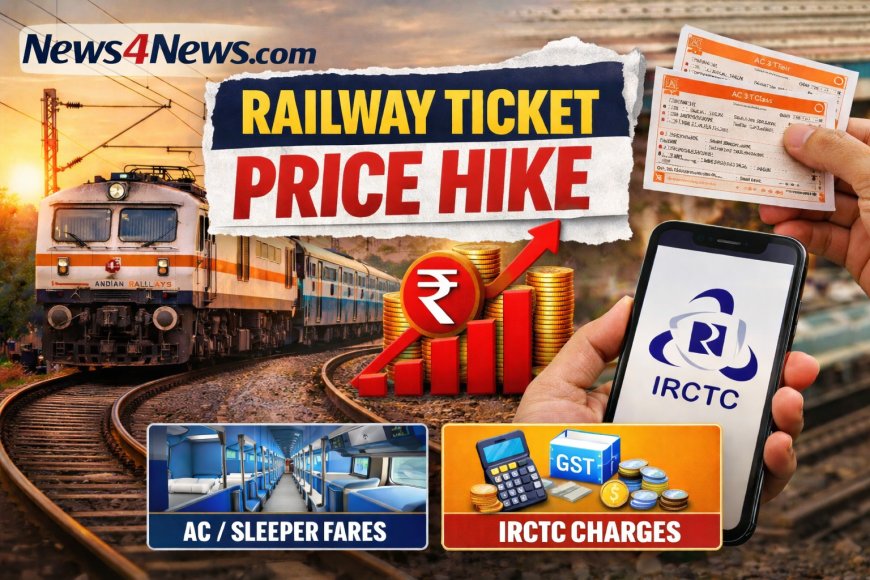
Indian Railways, one of the largest transport networks in the world, has revised its passenger fare structure, leading to a hike in train ticket prices for long-distance journeys. The new pricing system aims to balance rising operational costs while keeping travel affordable for the general public. Here is a clear and simple explanation of what the hike is, how much extra passengers will pay, and what IRCTC charges during ticket booking.
Railway Ticket Price Hike Implemented This Month
Indian Railways has implemented a ticket fare hike for long-distance train journeys starting December 26, 2025. The revised fares apply to newly booked tickets for sleeper and AC classes, while suburban trains and monthly season ticket holders remain unaffected.
Under the new structure, passengers will pay a small per-kilometre increase, resulting in an additional cost of around ₹20–₹45 on long routes such as Delhi–Mumbai and Kolkata–Chennai. Tickets booked before the implementation date continue at old prices. IRCTC convenience fees and applicable GST remain unchanged.
When Did the Ticket Price Hike
Come Into Effect?
The revised railway fare structure applies to tickets booked on or after the notified implementation date. Tickets booked earlier remain valid at old prices, even if the journey date is later.
• Who Is Affected by the Fare Hike?
Affected Passengers
- Long-distance travellers
- Passengers using Mail, Express, Rajdhani, Shatabdi, Vande Bharat, Tejas, Duronto, and other reserved trains
- Sleeper class and all AC classes
Not Affected
- Suburban/local train passengers
- Monthly Season Ticket (MST) holders
- Short-distance second-class ordinary travellers up to a limited distance
• How Much Has the Ticket Price Increased?
•o.
The fare hike has been introduced in two main ways:
1) Distance-Based Increase (Second
Class Ordinary - Long Distance)
|
Distance Travelled |
Extra Fare |
|
Up to 215 km |
No increase |
|
216 - 750 km |
₹5 extra |
|
751 -1250 km |
₹10 extra |
|
1251 - 1750 km |
₹15 extra |
|
1751- 2250 km |
₹20 extra |
This structure ensures that short journeys remain affordable, while longer trips contribute slightly more.
2) Per-Kilometre Increase (Reserved
Classes)
For most reserved classes, fares have increased based on kilometres travelled:
- Non-AC classes (Sleeper / General - long distance):
→ Around 70.01 per km - AC classes (AC 3-Tier, AC 2-Tier, Chair Car, First AC):
→ Around 70.02 per km
Example:
A passenger travelling 500 km in a sleeper class train may pay approximately 35-710 more than before. For AC classes, the increase may be slightly higher.
- What Does IRCTC Charge Common
Passengers?
When booking tickets online through IRCTC (Indian Railway Catering and Tourism Corporation), passengers should be aware of additional charges apart from the base fare.
IRCTC Charges Include:
1️⃣ Convenience Fee
- A fixed service charge for online booking
- Varies based on ticket class and journey type
2️⃣ GST (Goods & Services Tax)
- Applied on applicable services, including convenience fees
3️⃣ Payment Gateway Charges (Optional)
- Some payment methods like wallets may add small transaction fees
- UPI and net banking usually attract no extra charges
Final ticket amount = Base Fare + IRCTC Fee + GST + Optional Payment Charges
Why Did Indian Railways Increase Fares?
According to railway authorities, the fare revision was necessary to:
- Manage rising fuel and maintenance costs
- Improve financial health of Indian Railways
- Support infrastructure upgrades and passenger safety
- Maintain affordable pricing compared to other transport modes
The government has emphasized that the hike is modest and carefully structured to minimize the burden on common travelers.
Tips for Passengers
✔ Book tickets early to avoid future increases
✔ Use UPI or net banking to reduce extra charges
✔ Check the fare breakup before confirming payment
✔ Daily suburban commuters remain unaffected
Conclusion
The railway ticket price hike in India is limited, distance-based, and designed to protect short-distance and daily commuters. While long-distance passengers may notice a small increase in fares, Indian Railways continues to remain one of the most affordable transport systems in the country. Understanding the new fare structure and IRCTC charges helps travelers plan journeys better and avoid surprises at payment time.
What's Your Reaction?